
Methods
For more information, please contact mara@mrcirl.org
Overall Health Assessment
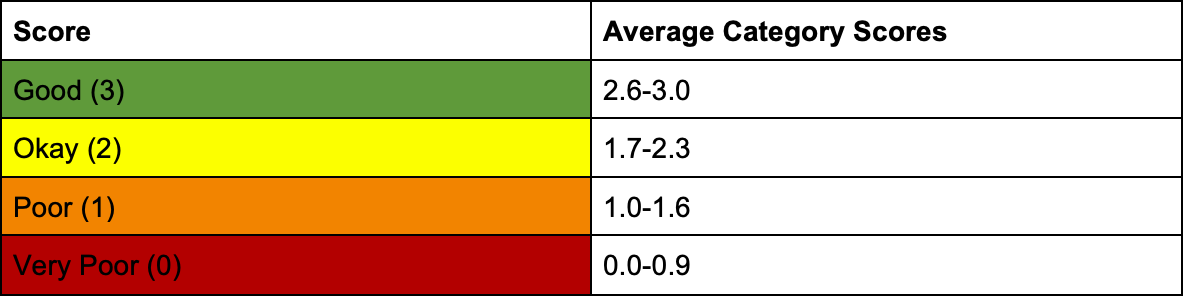
The general health assessment of the Indian River Lagoon sub-basins was determined by averaging the scores of three different categories: harmful algal blooms, water quality, and seagrass coverage. Sediment health and wastewater spills are shown as point data and not included in the overall grade due to the variable nature of the data. Data points are from August 1, 2024 – August 1, 2025. The following values were used to categorize the general assessment scores.
Sediment Health Assessment
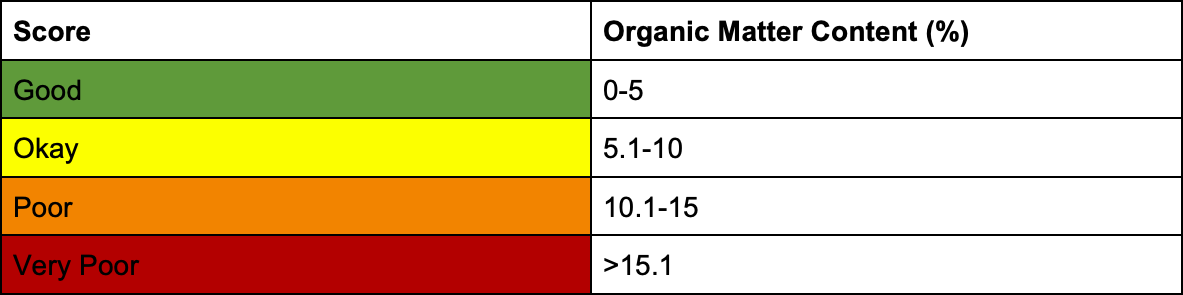
The sediment health assessment of the Indian River Lagoon sub-basins was determined using data obtained from the Florida Institute of Technology. It was decided to show these data as points instead of a general sub-basin score due to the lack of comprehensive data from throughout the lagoon. Organic matter content (%) was chosen as the indicator of sediment quality as it is directly related to benthic infauna community composition. An organic matter content greater than 5% is considered unhealthy. The following values were used to categorize the point scores.
Acknowledgements
Thank you to the Fox Lab at Florida Institute of Technology for compiling and sharing their data.
Wastewater Spill Assessment
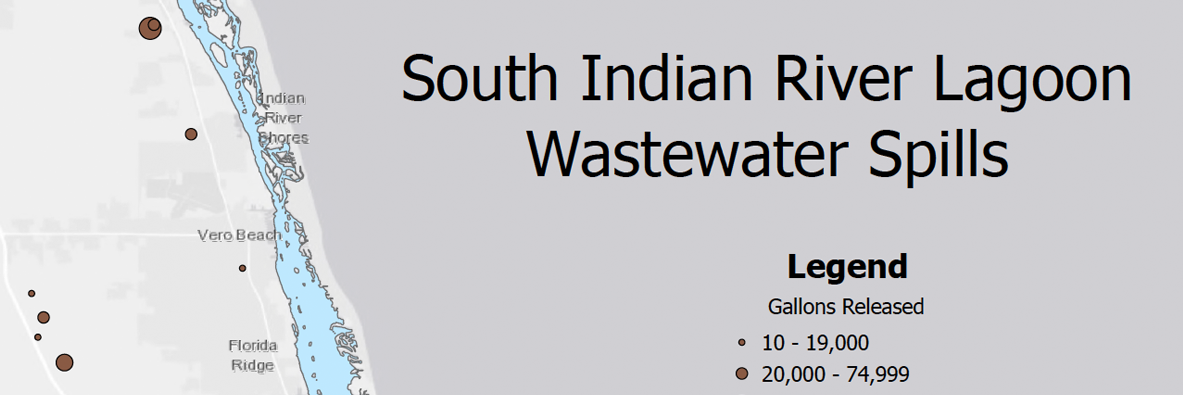
The wastewater spill assessment of the Indian River Lagoon sub-basins was determined using data from the Florida Department of Environmental Protection. It was decided to show these data as points so that the size and quantity of spills could be visualized. This assessment was not chosen to be a sub-basin score due to the variable nature of the data.
Acknowledgements
Thank you to the Florida Department of Environmental Protection for compiling and sharing the wastewater spill data for this project.
Harmful Algal Bloom Assessment
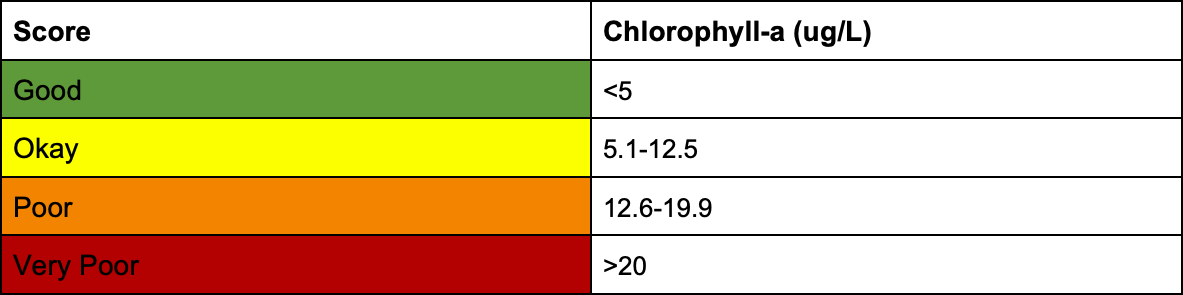
The harmful algal bloom (HAB) assessment of the Indian River Lagoon sub-basins was determined using chlorophyll-a data from the Florida Department of Environmental Protection’s Watershed Information Network and South Florida Water Management District’s DBHYDRO. Coordinate points for the blooms were unavailable, but it is important to note that even a small HAB can have long reaching effects. The following values were used to categorize the assessment scores.
Water Quality Assessment
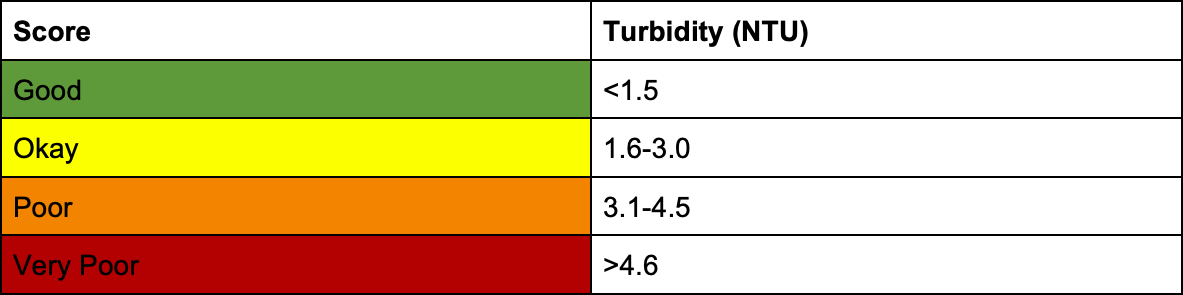
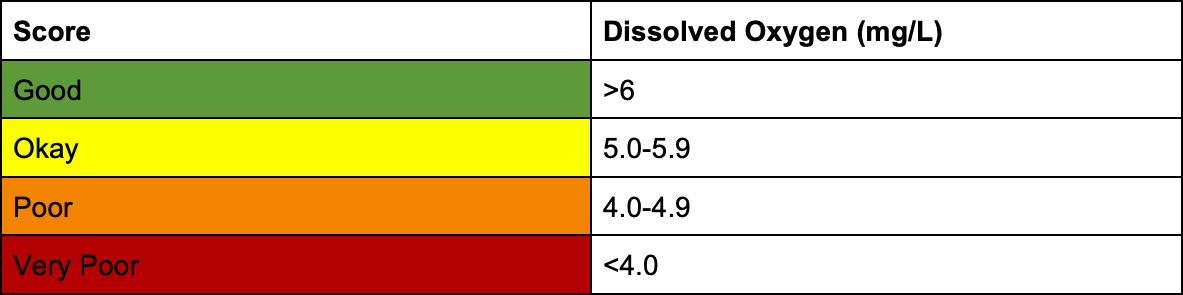
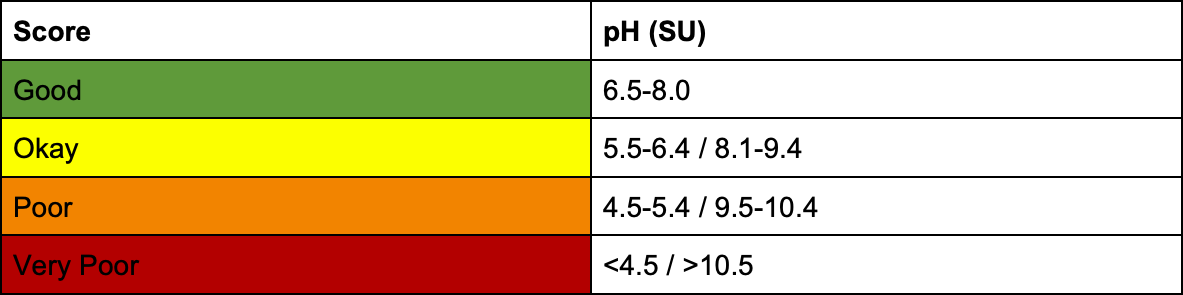
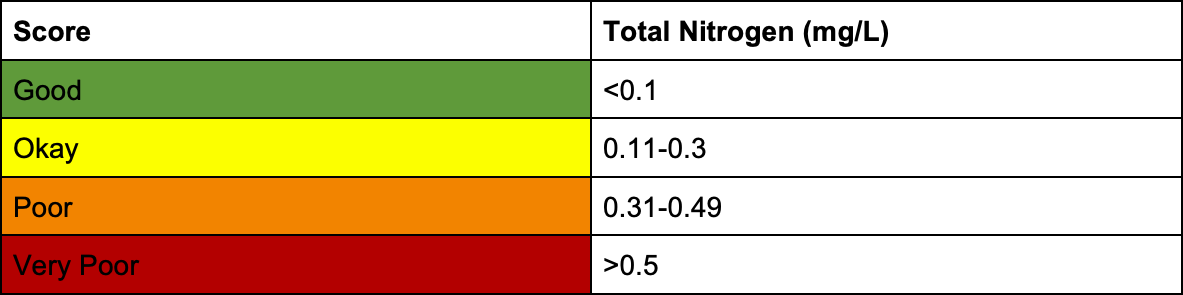
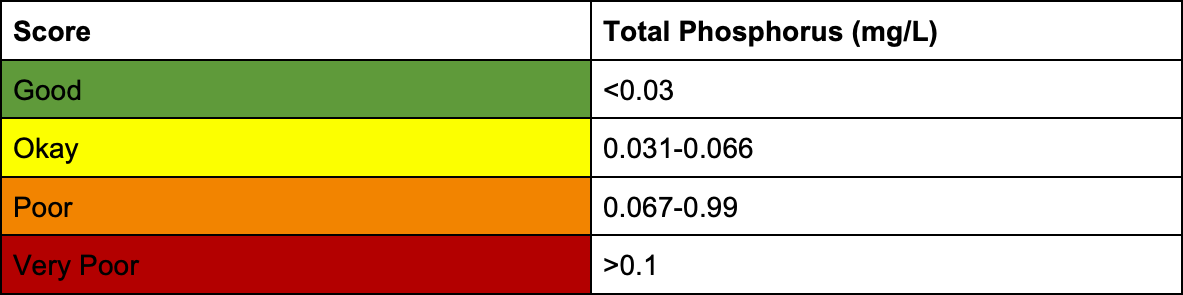
The water quality assessment of the Indian River Lagoon sub-basins was determined using data from the Florida Department of Environmental Protection’s Watershed Information Network and South Florida Water Management District’s DBHYDRO. Data was analyzed for dissolved oxygen (DO), turbidity, chlorophyll-a, pH, salinity, total nitrogen (TKN), and total phosphorus (TP-T). Median values were calculated to give each sub-basin an individual score per subcategory. Finally, the subcategory grades were compiled and averaged to give the complete water quality assessment score. The following values were used to categorize the assessment scores. Breakdown of assessment score values was obtained from the Environmental Protection Agency.
Acknowledgements
Thank you to Dr. Austin Fox of the Florida Institute of Technology for his guidance on assessment values and data analysis.
Seagrass Coverage Assessment
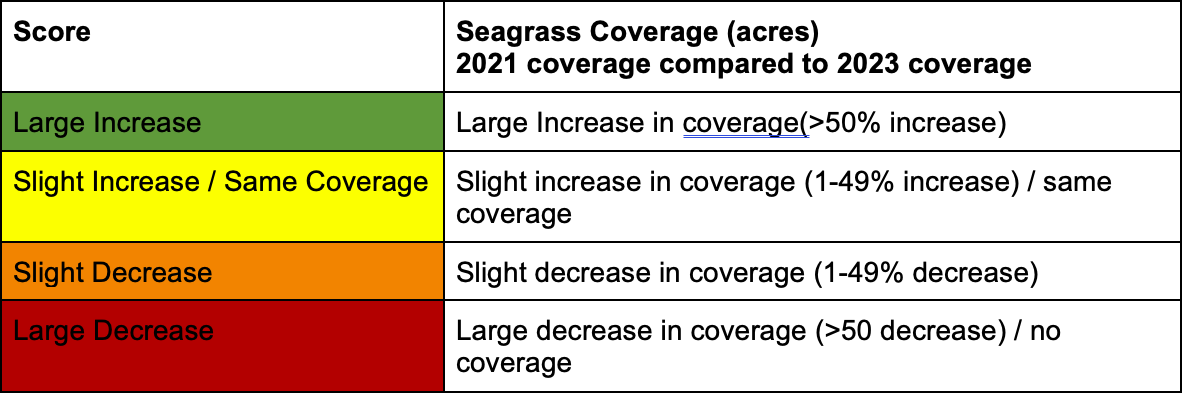
The seagrass coverage assessment of the Indian River Lagoon sub-basins was determined using data from St. Johns River Water Management District. Data is collected and analyzed every two years. Seagrass coverage from 2021 was compared to coverage from 2023. The following values were used to categorize the assessment scores.
Acknowledgements
Thank you to St. Johns Water Management District (especially Lorae Simpson and Lauren Hall) for providing the seagrass mapping data.
Salinity
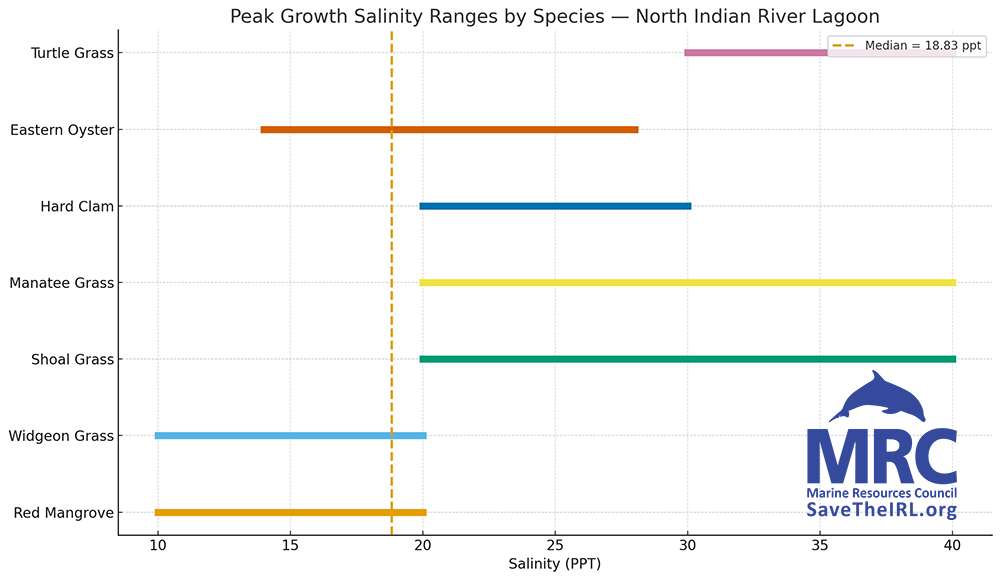
At the recommendation of experts in the field, this years’ salinity data was analyzed and reported. Salinity data was obtained from the Florida Department of Environmental Protection’s Watershed Information Network and South Florida Water Management District’s DBHYDRO. To gain context on salinity values, the peak growth thresholds of critical stationary organisms were gathered and compared to median basin salinity data. Organisms include, red mangroves, the eastern oyster, the hard clam, turtle grass, shoal grass, manatee grass, and widgeon grass. Salinity data is shown in a stacked chart for each basin.
Your Financial Support Makes It Happen!
Donate to become an Annual Member Today!
Marine Resources Council (MRC) coordinates Lagoon-wide efforts to Save the Indian River Lagoon, but we need your support to succeed. It will take a community to save the Lagoon, working at all levels.
MRC is holding government workshops, coordinating diverse stakeholder groups, showcasing community leaders, and working with businesses and individuals to encourage actions that will help save the Indian River Lagoon.
This website is managed by the Marine Resources Council, a 501(c)(3) nonprofit organization that has been dedicated to protecting and restoring the Indian River Lagoon since 1983.
Marine Resources Council • 3275 Dixie Hwy NE, Palm Bay, FL 32905.
Community Workshops
Science
LagoonWatch
2024 Report
IRL Action Assemblies
Restoration
Mangrove Nursery
Education
Lagoon at Noon
Low Impact Development
2026 LID Conference
2025 LID Conference
2024 LID Conference
2023 LID Conference
2022 LID Conference
2021 LID Conference
Teacher Resources
Rain Barrels
Site development by Editype.