
Banana River Lagoon
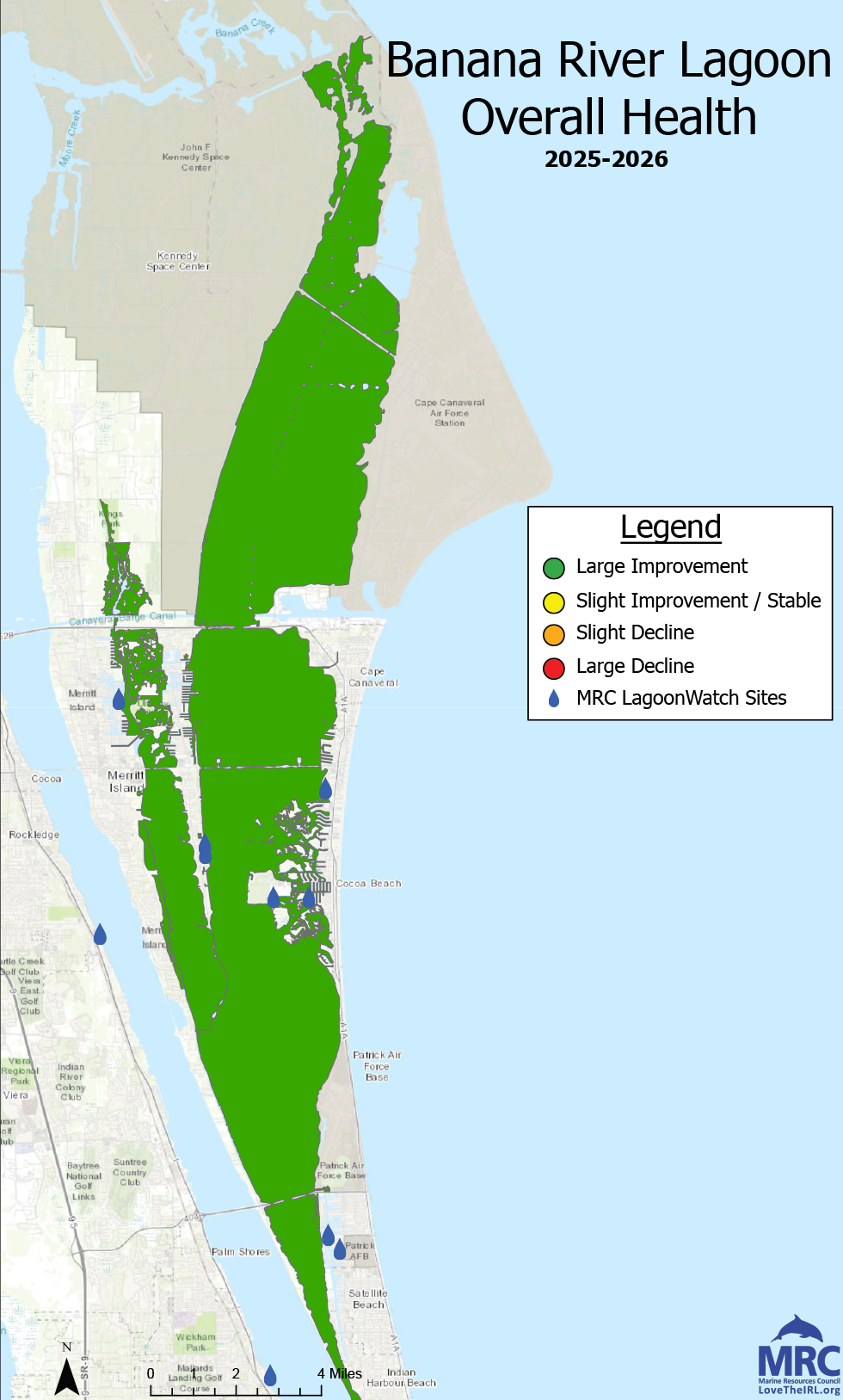
The 2026 health assessment for the Banana River Lagoon is “Large Improvement.” This is an improvement from the 2025 health assessment for the basin due largely to the large increase in seagrass coverage. Although water quality was assessed as “fair” again this year, water clarity (turbidity) and phosphorus concentrations did decline from 2025 to 2026.
Algal Blooms
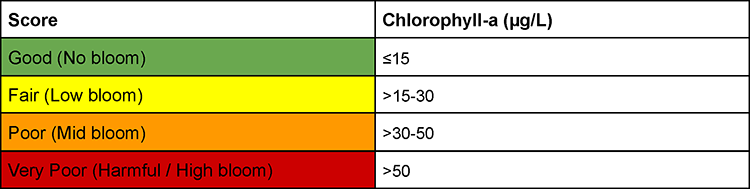
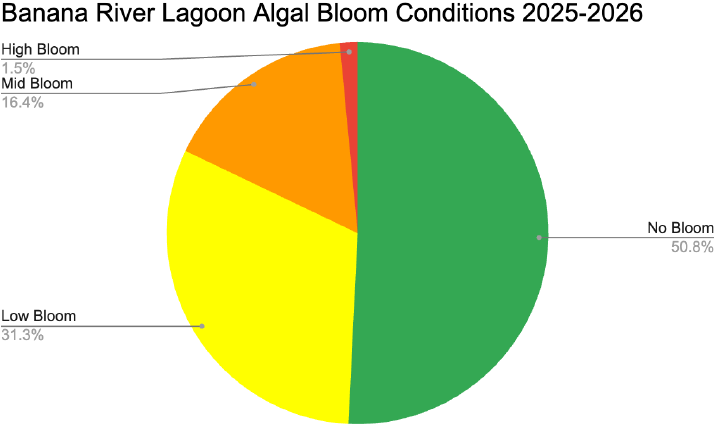
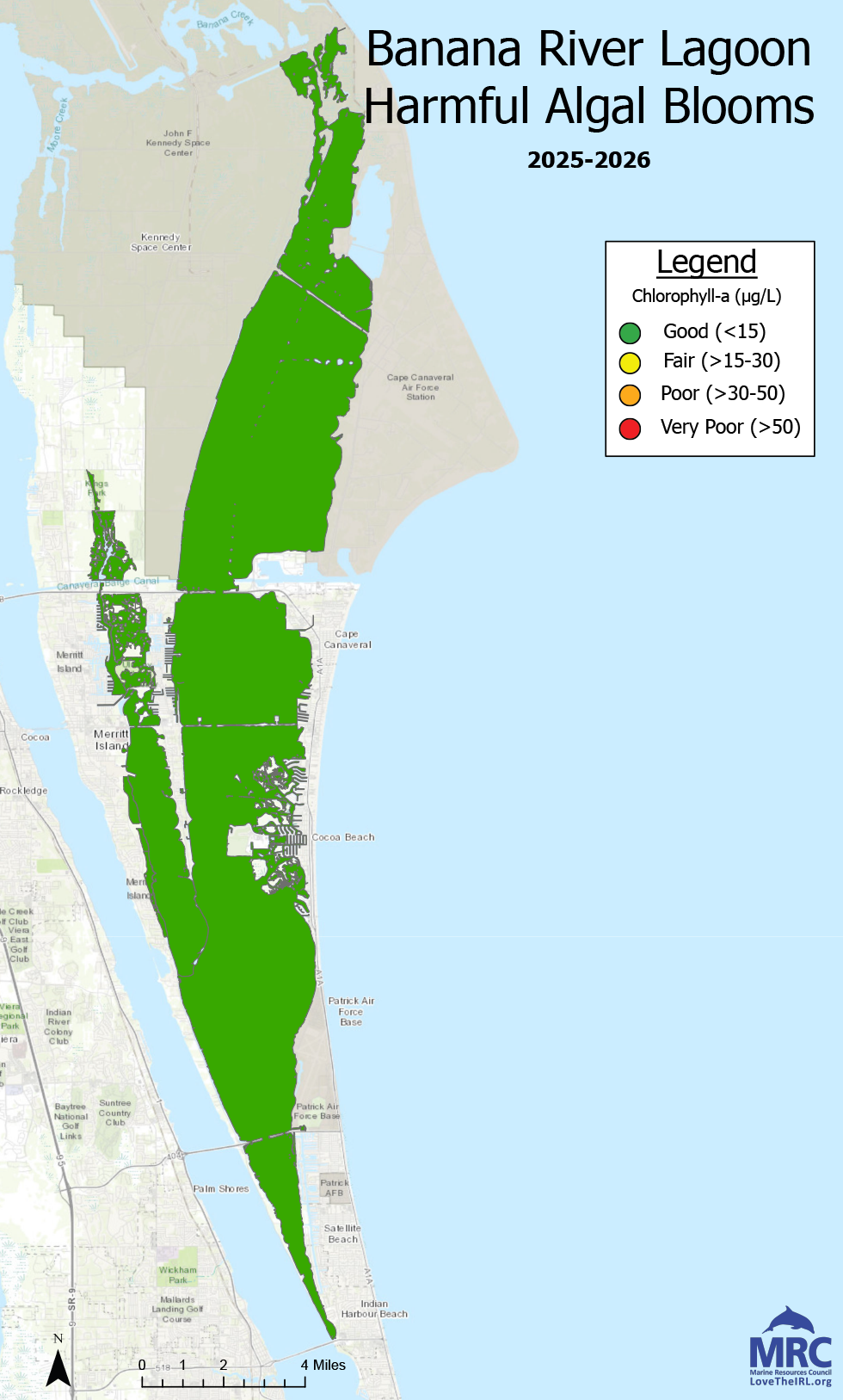
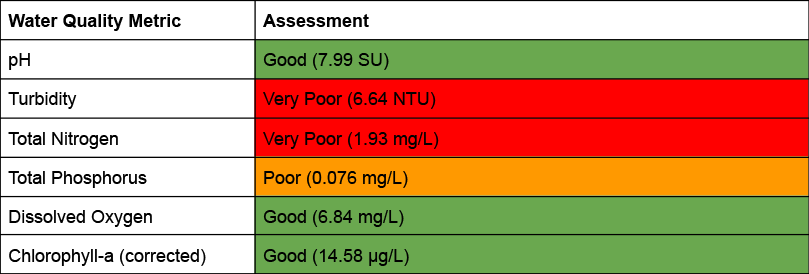
Based on chlorophyll-a data collected between August 1, 2025 to August 1, 2026, the Banana River Lagoon experienced algal bloom conditions 49.2% of the time, though only mid and high bloom levels 17.9% of the time. The median chlorophyll-a concentration in the basin for the year was 14.58 µg/L, earning a “good” assessment, although on the edge of “fair.”
Salinity
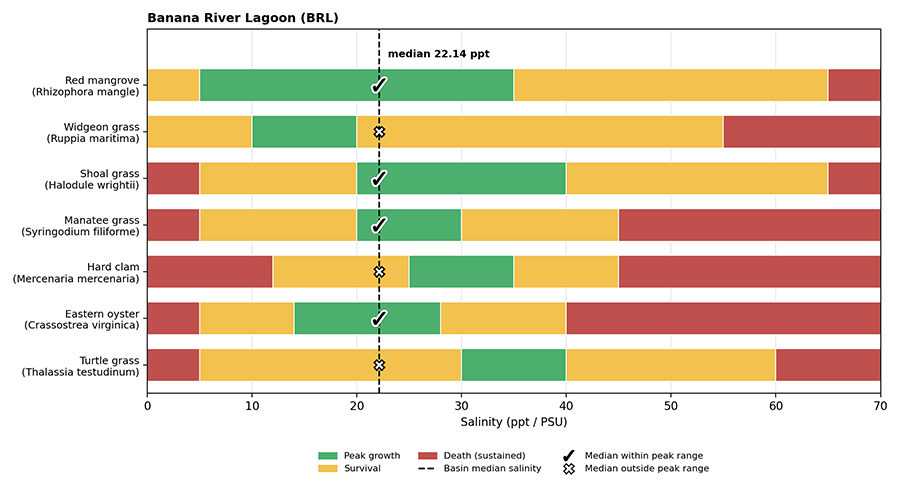
From August 2025 to August 2026, median salinity in the Banana River Lagoon was at levels that support peak growth of oysters, clams, and at least two species of seagrass (median = 22.14 ppt).
A median salinity of about 22 ppt is favorable for restoration in the Banana River Lagoon because it falls in the polyhaline range (roughly 18–30 ppt), where most of the target restoration species overlap comfortably within their tolerances. It is also far enough above the brackish zone to support a diverse estuarine-marine community, but not so high that it favors the predators, pathogens, and stressors that come with full seawater.
Seagrass
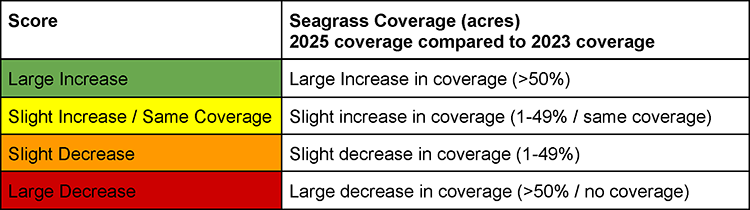
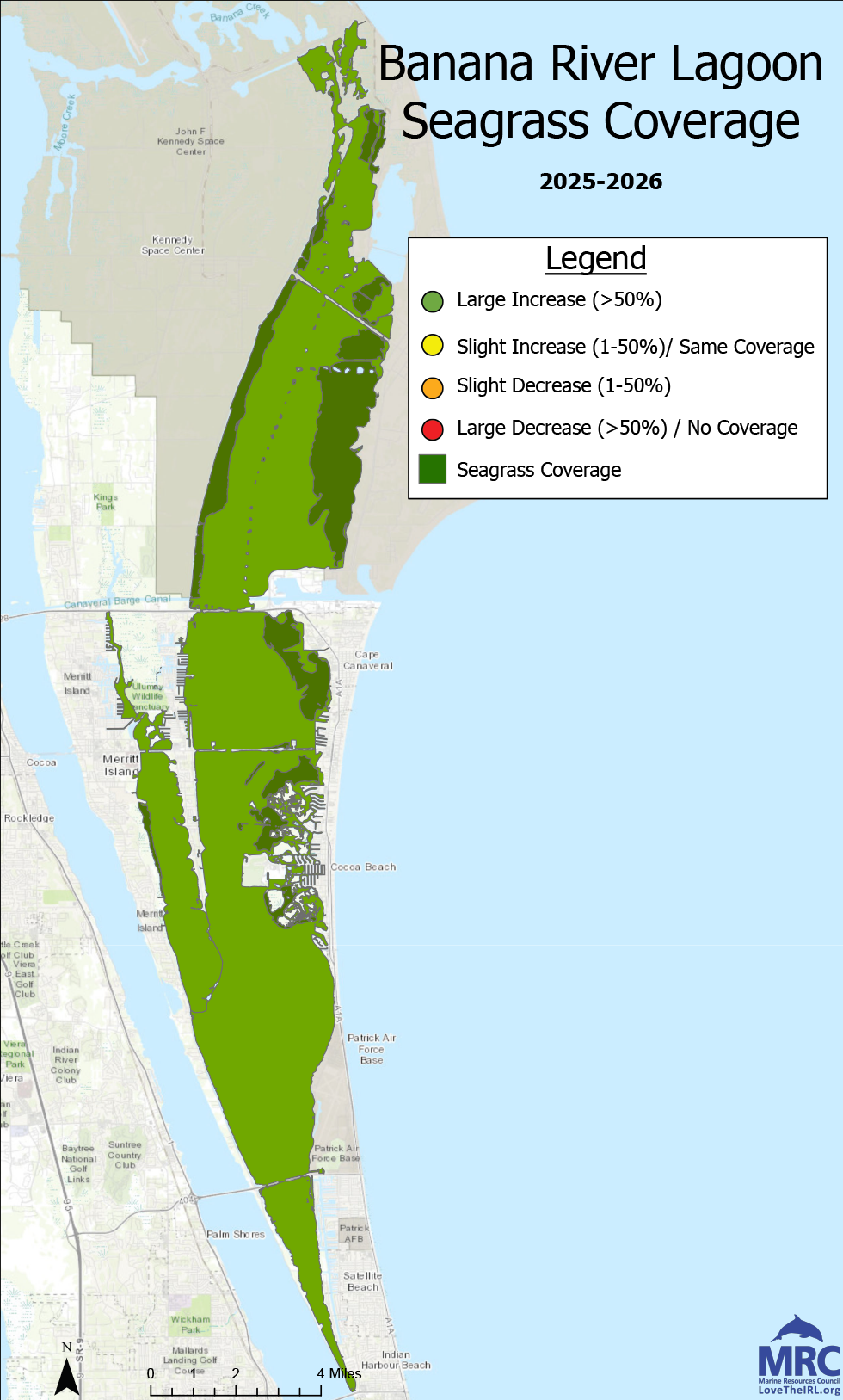
The Banana River Lagoon had a “large increase” in seagrass coverage. Based on St. Johns River Water Management District mapping data, seagrass coverage changed from 167 acres in 2023 to 7,370 acres present in 2025. This represents a 4,313% increase in coverage. Mapping data are taken every two years and 2027 coverage will be available by spring of 2028.
Sediment Health
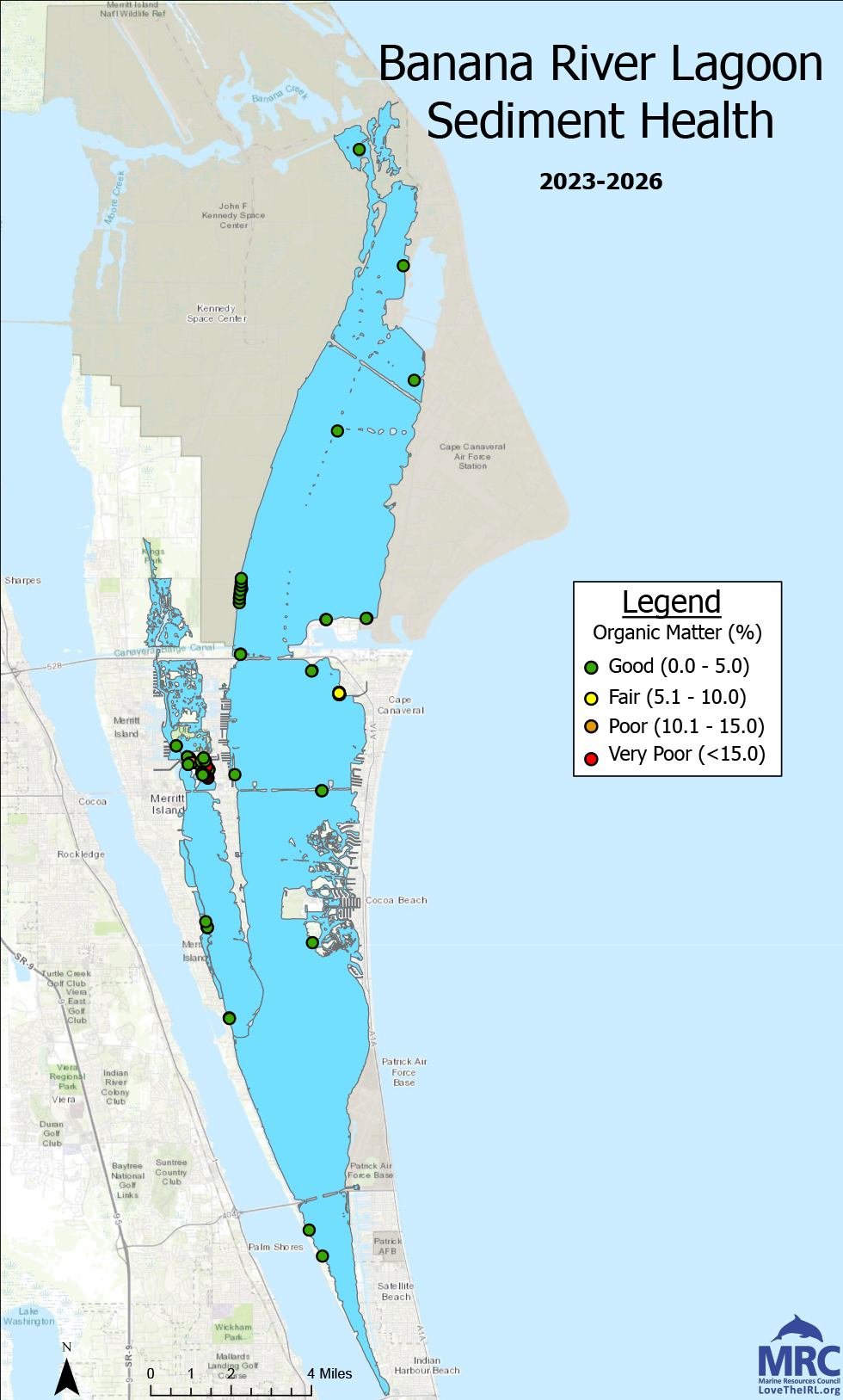
Sediment health data points for the Banana River Lagoon came from MRC, Florida Institute of Technology, and Smithsonian Fort Pierce Marine Station research. Sediment health was mostly good where sampled, but are too limited to draw basin-wide conclusions.
Wastewater Spills
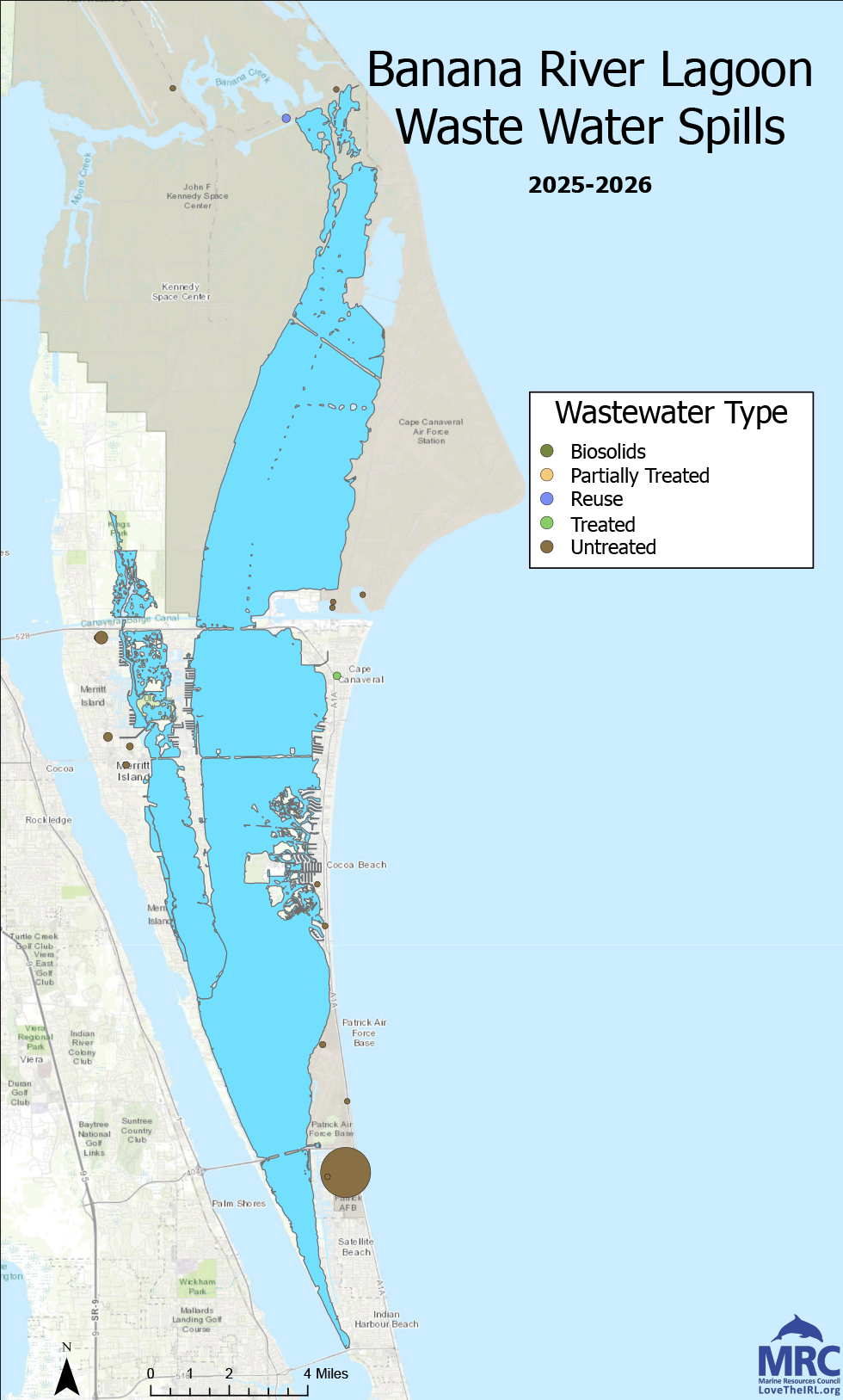
From August 2025 to August 2026, there were 18 wastewater spills that affected the Banana River Lagoon watershed with five releasing into the Lagoon. Of those five spills (between 1 and 14,000 gallons), all released untreated wastewater. This is ten more spills than the eight spills reported in this watershed last year.
Water Quality
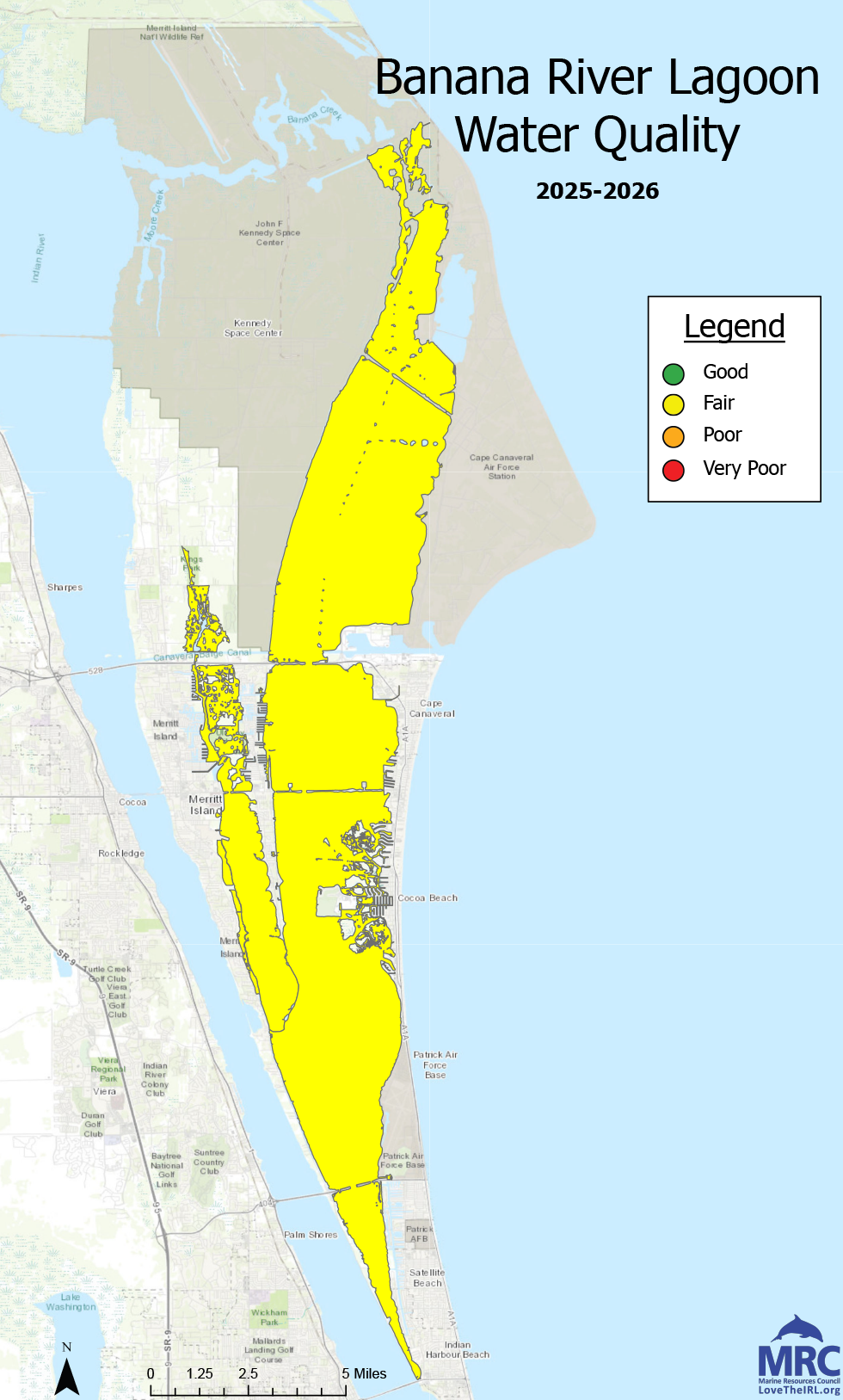
Water quality in the Banana River Lagoon was “fair” in 2026. The health indicator assessment is based on averaging the pH, turbidity, total nitrogen, total phosphorus, dissolved oxygen, and chlorophyll-a values in the basin. The Banana River Lagoon water quality is broken down below. Changes from 2025 include declining turbidity and total phosphorus and improving pH (alkalinity).
Your Financial Support Makes It Happen!
Donate to become an Annual Member Today!
Marine Resources Council (MRC) coordinates Lagoon-wide efforts to Save the Indian River Lagoon, but we need your support to succeed. It will take a community to save the Lagoon, working at all levels.
MRC is holding government workshops, coordinating diverse stakeholder groups, showcasing community leaders, and working with businesses and individuals to encourage actions that will help save the Indian River Lagoon.
This website is managed by the Marine Resources Council, a 501(c)(3) nonprofit organization that has been dedicated to protecting and restoring the Indian River Lagoon since 1983.
Marine Resources Council • 3275 Dixie Hwy NE, Palm Bay, FL 32905.
Community Workshops
Science
LagoonWatch
2025 Report
2024 Report
IRL Action Assemblies
Restoration
Mangrove Nursery
Education
Lagoon at Noon
Low Impact Development
2026 LID Conference
2025 LID Conference
2024 LID Conference
2023 LID Conference
2022 LID Conference
2021 LID Conference
Teacher Resources
Rain Barrels
Site development by Editype.